

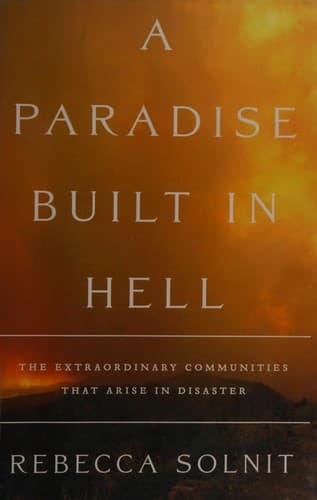
This book looks closely at how people behave in major disasters, arguing against the idea that chaos and panic are the default. Using historical episodes and reporting, it shows recurring patterns of spontaneous cooperation, improvisation, and mutual aid that form temporary communities in the wake of catastrophe.
Why it connectsSibyl sees a broader connection here, but not one precise enough to name.
Worth knowingSeekers of step-by-step disaster preparedness manuals.