

Set on Chicago's South Side in the 1930s, the novel follows Bigger Thomas, a young Black man shaped by crushing poverty and social isolation.
Why it connectsShared: Incendiary.
Worth knowingReaders seeking light or uplifting entertainment.
Book
Preparing this book and its discovery paths.
Gathering the strongest related paths from this book.
Set on Chicago's South Side in the 1930s, the novel follows Bigger Thomas, a young Black man shaped by crushing poverty and social isolation.
Why it connectsShared: Incendiary.
Worth knowingReaders seeking light or uplifting entertainment.
An editorial assistant who has been the only Black employee at a New York publishing house faces a change when another Black woman is hired.
Why it connectsSibyl sees a broader connection here, but not one precise enough to name.
Worth knowingReaders seeking fast-paced action or plot-first thrillers.
.png%3Fwidth%3D700&w=3840&q=75)
An anonymous narrator, a North Vietnamese mole embedded in the South Vietnamese army, recounts life after the fall of Saigon while living among a South Vietnamese exile community in the United States.
Why it connectsSibyl sees a broader connection here, but not one precise enough to name.
Worth knowingThose wanting fast-paced, plot-first thrillers.

Set in an imagined America where the state offers convicted people a brutal alternative—participation in televised death matches run by the CAPE program—the novel follows top combatants whose lives and identities are shaped by that system.
Why it connectsShared: Contemporary Literary Fiction and Acerbic.
Worth knowingReaders who prefer gentle or understated depictions of violence.
An unnamed Black narrator recounts his journey through segregated American life, encountering institutions, movements, and people that test his sense of self.
Why it connectsShared: First Person Narrator.
Worth knowingThe episodic journey leans into speeches, symbolism, and surreal set pieces rather than tidy realism or quick resolution.
After returning to her birth country from the United States, a recent graduate begins receiving the voice of her dead grandmother—a former medium tied to a local deity.
Why it connectsShared: Irreverent.
Worth knowingReaders seeking slow, contemplative mythic fantasy and sprawling worldbuilding.

Set at a small, elite liberal-arts college, the novel follows a tight group of Classics students whose scholarly intensity and social isolation lead to a violent rupture.
Why it connectsShared: First Person Narrator.
Worth knowingReaders seeking fast-paced, clue-driven detective plots.

Presented through a collage of documents, memoir excerpts, and alternate accounts, the novel orients on a secretive, immensely wealthy financier and the contested stories about him and his wife.
Why it connectsSibyl sees a broader connection here, but not one precise enough to name.
Worth knowingReaders seeking a linear, emotionally intimate family drama.

Set aboard a generation ship, the novel follows life inside a rigidly stratified vessel where social caste, inherited servitude, and systemic racism govern daily existence.
Why it connectsSibyl sees a broader connection here, but not one precise enough to name.
Worth knowingDense social detail and sustained bleakness reduce action-oriented momentum and quick payoff.
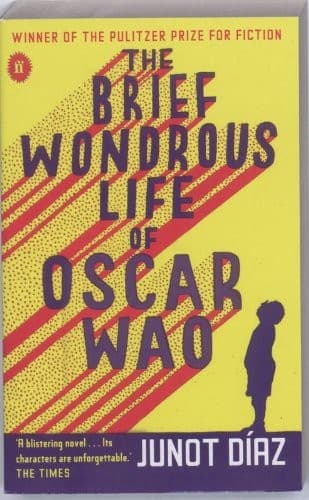
Set chiefly in New Jersey with ties to the Dominican Republic, the novel follows Oscar de León — a lonely, pop-culture–obsessed young man — and his family across generations as they live under the shadow of a transatlantic curse linked to historical brutality.
Why it connectsShared: Irreverent.
Worth knowingReaders preferring strictly linear, uniformly realistic narratives.
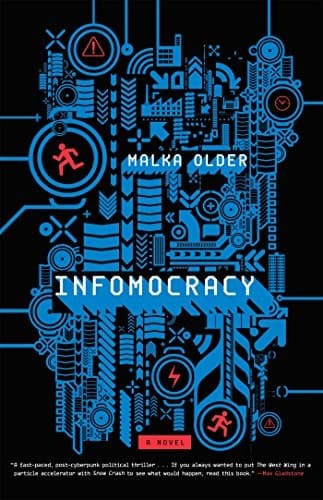
Set around a near-future global election system in which small, competitive micro-democracies (centers of political power) and powerful information platforms shape outcomes, the book follows intersecting characters whose loyalties, jobs, and survival link to campaigns, corporate interests, and the flow of data.
Why it connectsSibyl sees a broader connection here, but not one precise enough to name.
Worth knowingReaders seeking slow, introspective character studies.
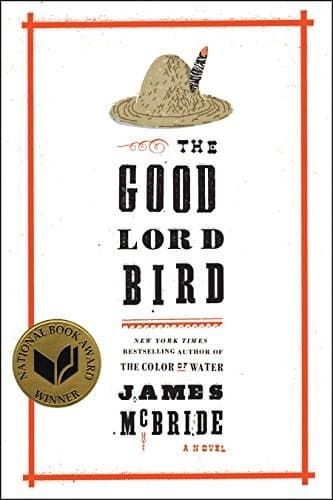
Set in the violent 1850s, the novel follows Henry Shackleford, a young enslaved boy who becomes involved with abolitionist John Brown.
Why it connectsShared: Race and Identity.
Worth knowingReaders who prefer strictly realistic or minimalist historical fiction.