
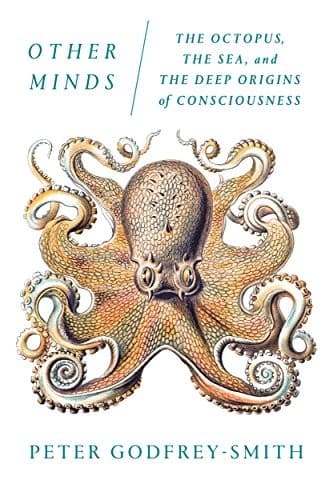
An investigation into nonhuman minds using cephalopods—especially octopuses—as a case study.
Why it connectsShared: Consciousness and Curious.
Worth knowingReaders seeking dense, technical neuroscience or lab protocols.
Book
Preparing this book and its discovery paths.
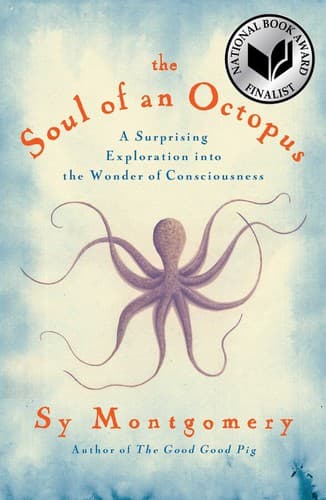
Gathering the strongest related paths from this book.
An investigation into nonhuman minds using cephalopods—especially octopuses—as a case study.
Why it connectsShared: Consciousness and Curious.
Worth knowingReaders seeking dense, technical neuroscience or lab protocols.
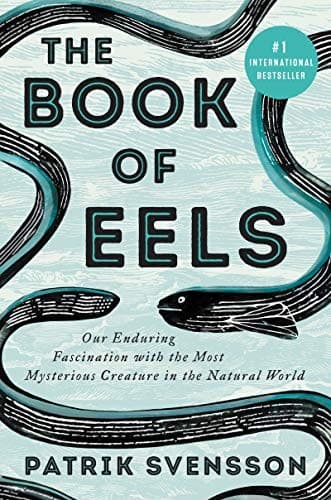
A meditation on eels that interweaves the species’ baffling lifecycle and scientific search with the author’s personal reflections. The book traces biological questions about migration and reproduction while using those puzzles as a lens for broader natural-history investigation and memoir-inflected curiosity.
Why it connectsShared: Marine Life and Nature Writing.
Worth knowingReaders expecting a conventional memoir arc or fast-paced storytelling.
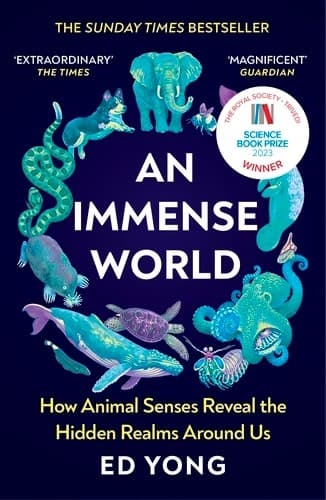
A guided tour of nonhuman perception: the book documents how different animals experience the world through vision, smell, hearing, electroreception and other senses, and shows how those sensory systems reveal distinct "realms".
Why it connectsShared: Popular Science.
Worth knowingReaders wanting a very light, short-form overview of animal senses.
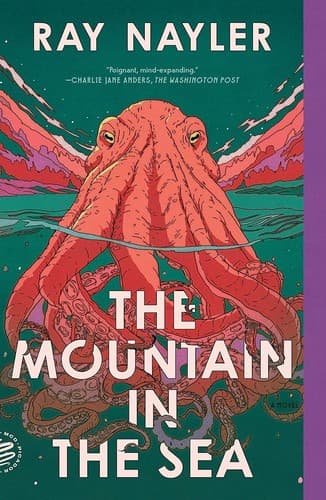
In a near-future coastal setting, scientists discover a hyper-intelligent octopus species and confront what that intelligence means for ethics, exploitation, and human self-understanding. The discovery triggers corporate and political interests, forcing choices about study, containment, and contact.
Why it connectsSibyl sees a broader connection here, but not one precise enough to name.
Worth knowingReaders wanting a blockbuster, action-first thriller.
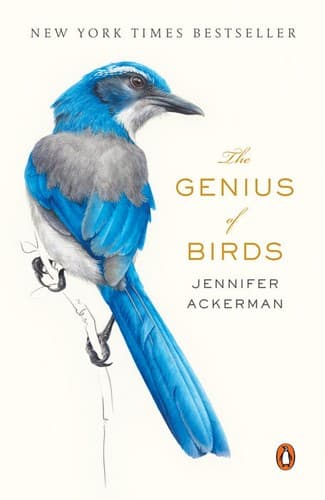
This nonfiction work surveys evidence for complex learning, problem-solving, and memory in birds by following field observations and laboratory studies across species.
Why it connectsShared: Episodic Chapters, Nature Writing, and Natural History.
Worth knowingThose wanting full technical methods, statistics, or exhaustive literature reviews.
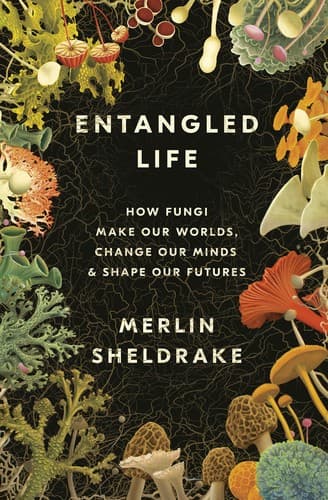
An exploration of fungi and their roles across ecosystems and human life, surveying fungal biology, ecological relationships, and practical implications.
Why it connectsShared: Episodic Chapters and Popular Science.
Worth knowingReaders seeking a short, purely introductory primer on fungi.
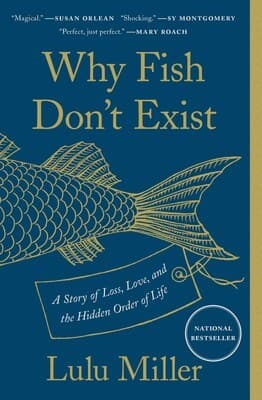
Lulu Miller interweaves a personal memoir about grief and depression with the life and work of 19th-century fish taxonomist David Starr Jordan to probe how humans try to impose order on a chaotic world.
Why it connectsShared: Natural History and Creative Nonfiction.
Worth knowingReaders who prefer strictly linear, event-driven memoirs.
An expansive non-fiction survey of the ocean that traces its origins, physical processes, and living systems while explaining scientific findings in accessible, often lyrical language.
Why it connectsShared: Nature Writing and Curious.
Worth knowingReaders seeking the latest, technical oceanography research.
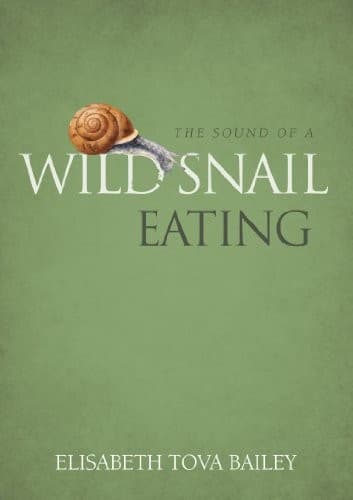
An author convalescing with a chronic illness observes and cares for a wild snail that becomes a daily companion. The book records close, patient attention to the snail’s behavior and anatomy while using that relationship to reflect on bodily experience, time, and recovery.
Why it connectsShared: Creative Nonfiction, Animal Behavior, and Curious.
Worth knowingReaders seeking fast-paced plot or dramatic action.
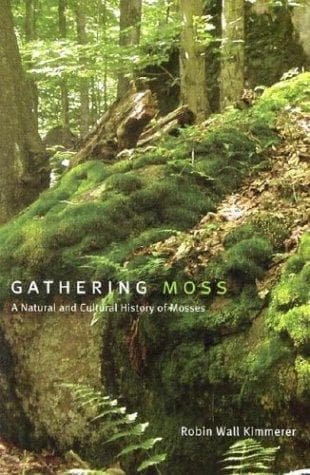
A collection of reflective natural-history essays focused on mosses and their place in forest ecosystems. The book links careful field observation of bryophytes to explanations of their biology and roles in plant ecology, while connecting those details to cultural and life-history perspectives about plants.
Why it connectsShared: Episodic Chapters, Nature Writing, and Field Observation.
Worth knowingThose wanting a technical, reference-style botany textbook.
A 15-year-old math-minded narrator who describes his world through exact observations decides to investigate the mystery of a neighbor's dead dog. The investigatory quest exposes family tensions and forces the narrator to navigate social rules and sources of fear while trying to hold to his own systems of logic.
Why it connectsShared: Episodic Chapters and Observational.
Worth knowingReaders seeking multiple viewpoints or broad social panoramas.
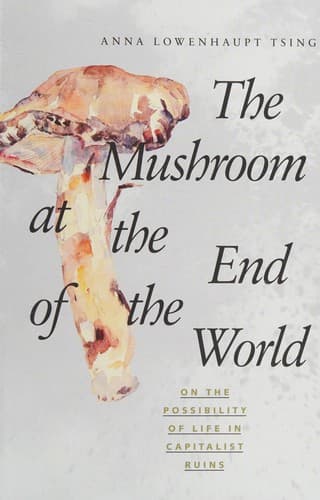
An ethnographic study of matsutake mushrooms and the people and places shaped by their global trade. The author follows harvesters, middlemen, buyers, and landscapes to show how a single wild commodity links local ecological disturbance, precarious livelihoods, and transnational markets.
Why it connectsSibyl sees a broader connection here, but not one precise enough to name.
Worth knowingReaders seeking a narrowly focused academic treatise with dense empirical tables.